CEMEX
Cement Plant Research
Multi-site ethnographic research across cement plant operations to uncover hidden human, operational, and business opportunities.
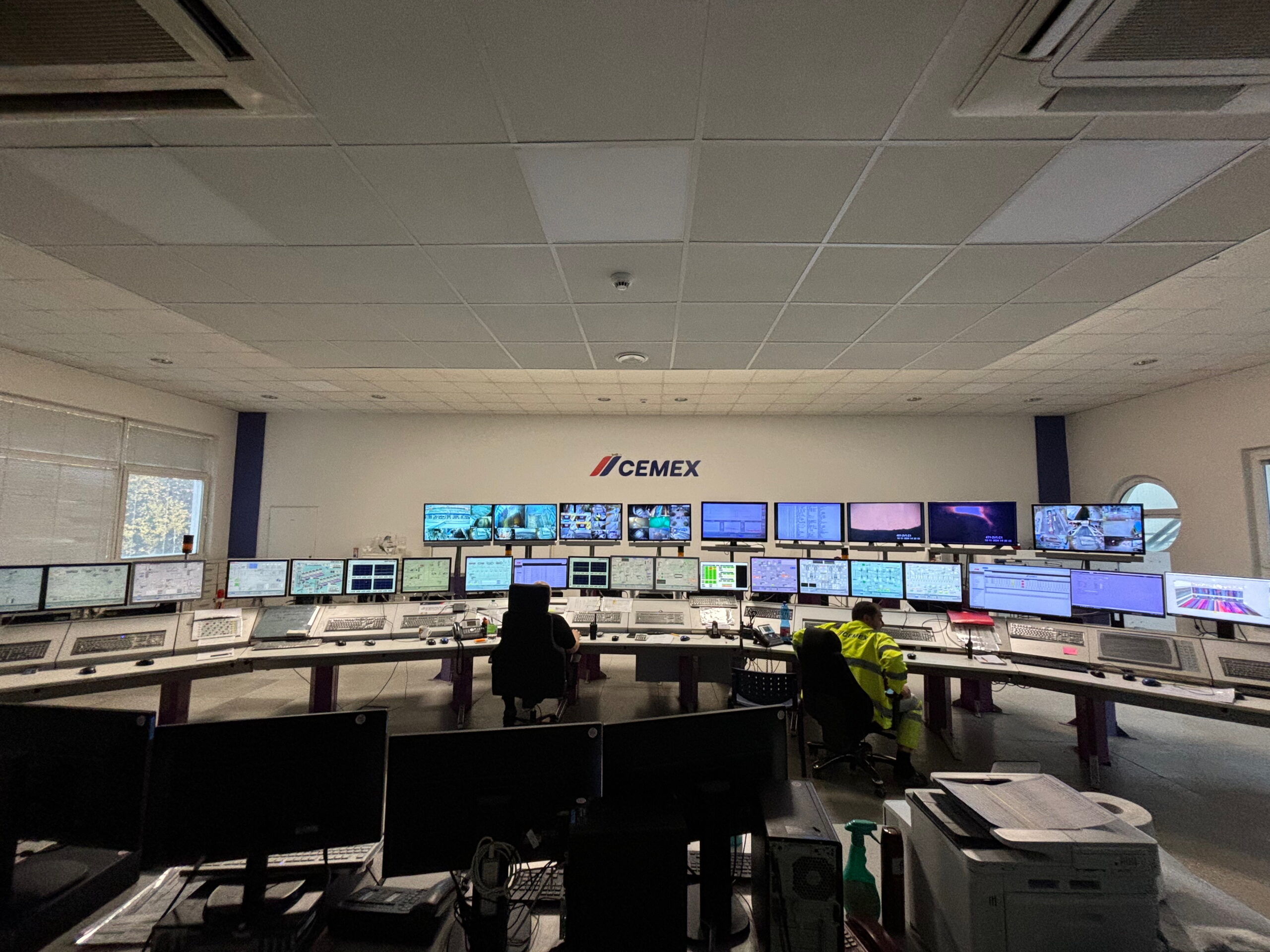
Cement production is a deeply human system hidden inside an industrial machine.
Cement plants are often seen as technical environments: machines, control rooms, sensors, production lines, trucks, quarries, silos, kilns, schedules, and safety rules.
But behind the operational system are people making decisions under pressure, interpreting fragmented signals, coordinating across roles, and compensating for gaps in tools, communication, training, and culture.

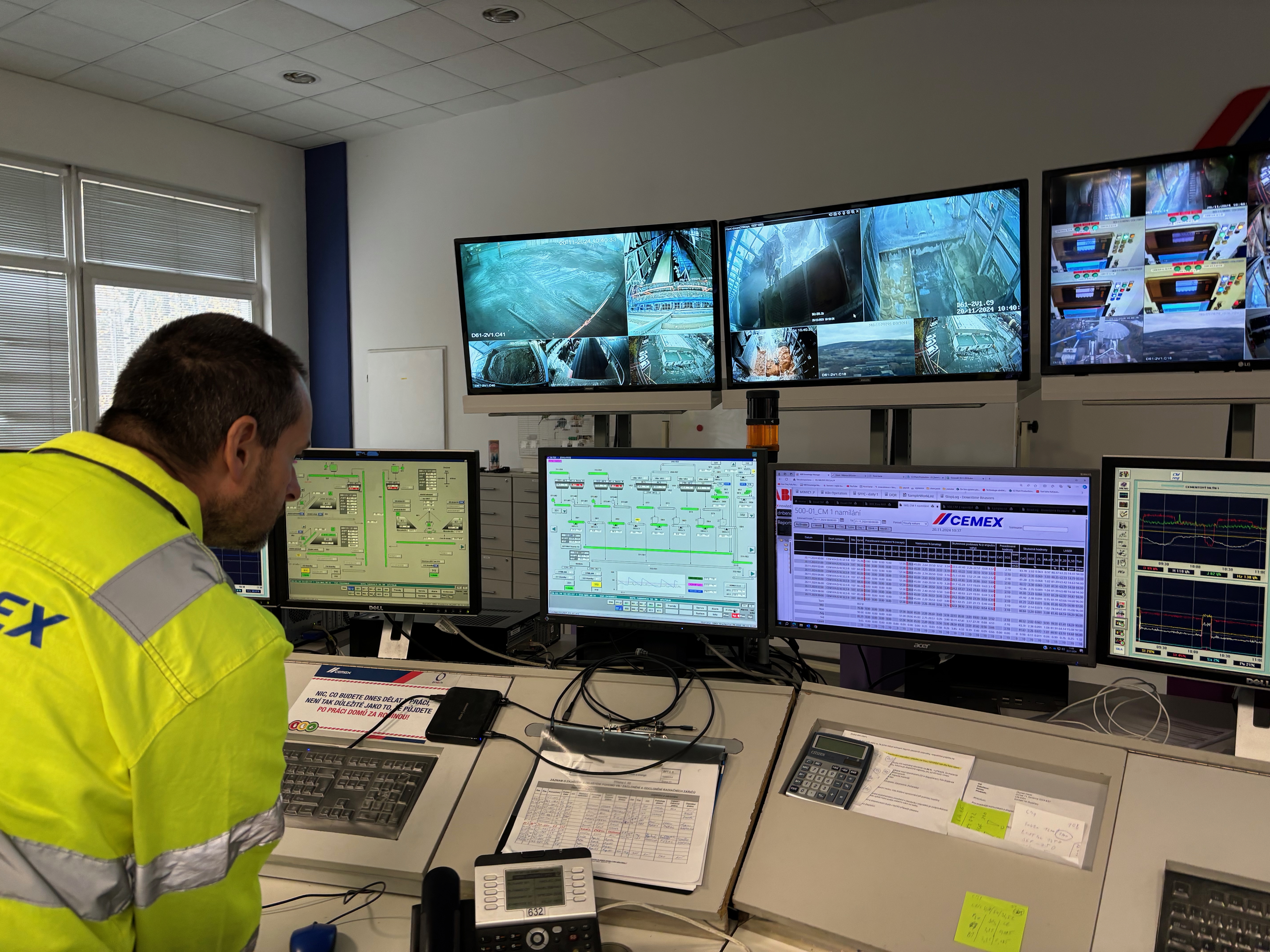
Operational efficiency was constrained by hidden friction in everyday work.
The plant environment contained many visible technical systems, but the real opportunity was often hidden in everyday human work: repetitive manual tasks, signal overload, fragmented communication, inconsistent equipment systems, knowledge transfer gaps, and reactive rather than predictive work.
These issues are not always visible from dashboards or process diagrams. They emerge through observation: watching how people actually work, where they hesitate, what they write down, what they ignore, what they repeat, and where they compensate for system limitations.
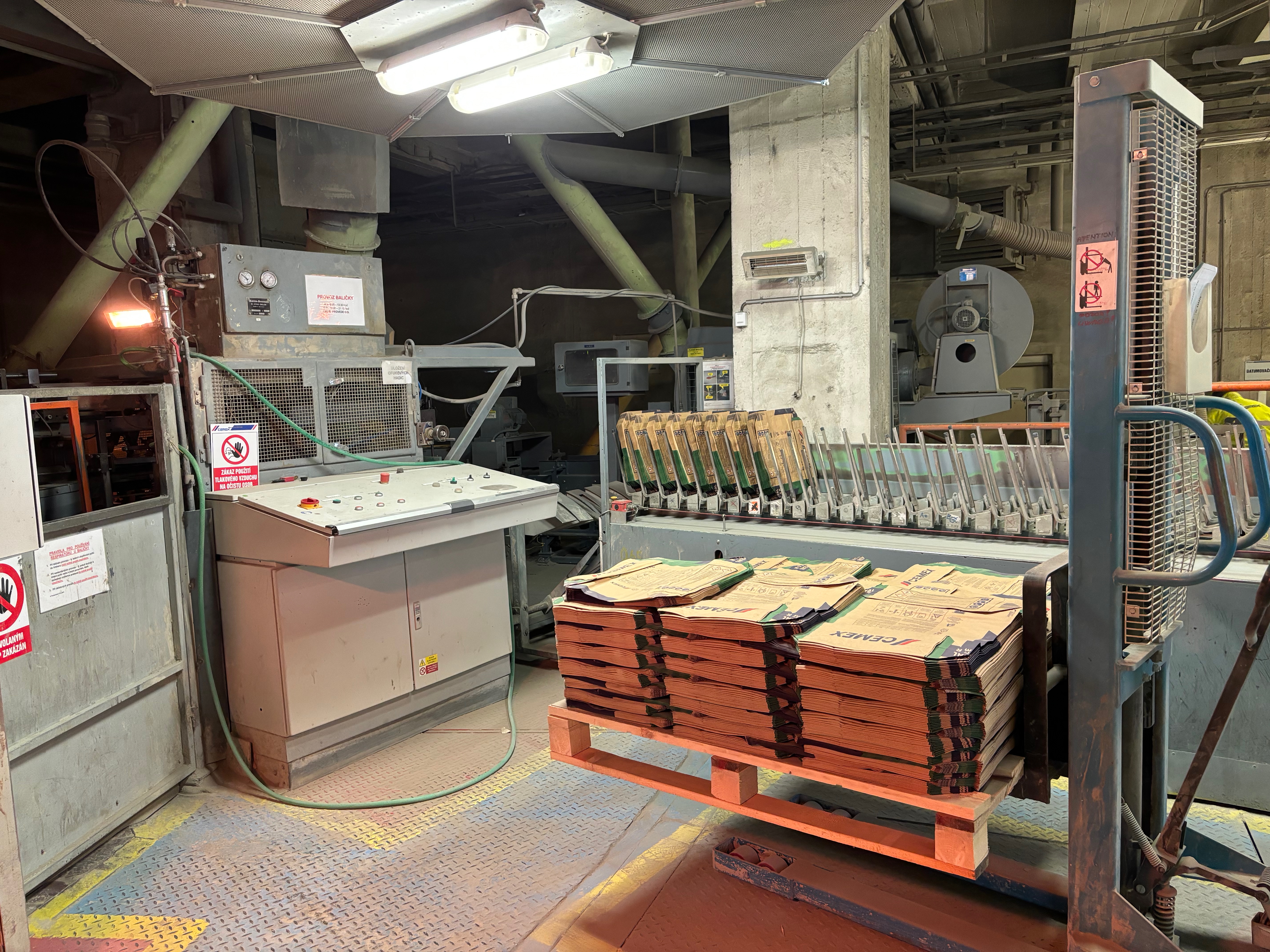

Ethnography before solution design.
The work focused on understanding the plant as a living ecosystem. This meant observing operators, production workers, maintenance contexts, control-room behaviour, information handovers, communication channels, and the practical realities of industrial work.
Instead of starting with a predefined software solution, the research looked for unmet needs, recurring patterns, emotional friction, safety behaviours, task breakdowns, and business consequences. The goal was to connect human insight with operational performance.
Observe real work
Study plant-floor and control-room behaviour in context, including routines, interruptions, signals, handovers and informal workarounds.
Identify hidden friction
Look beyond visible process maps to uncover communication gaps, manual effort, reactive work and safety behaviour patterns.
Connect to metrics
Translate human and operational issues into business metrics such as downtime, efficiency, retention, safety and training time.
Frame opportunities
Define opportunity areas for better tools, communication, predictive work, knowledge transfer and operational experience.
Operational excellence depends on human experience.
A factory may run efficiently on paper, but without understanding the people inside the system, it risks becoming a spiritless machine.
Research showed that improving how employees feel about their work, how they communicate, how they learn, and how they interpret complex operational signals can unlock both human and business value.
From operational pain points to measurable business improvements.
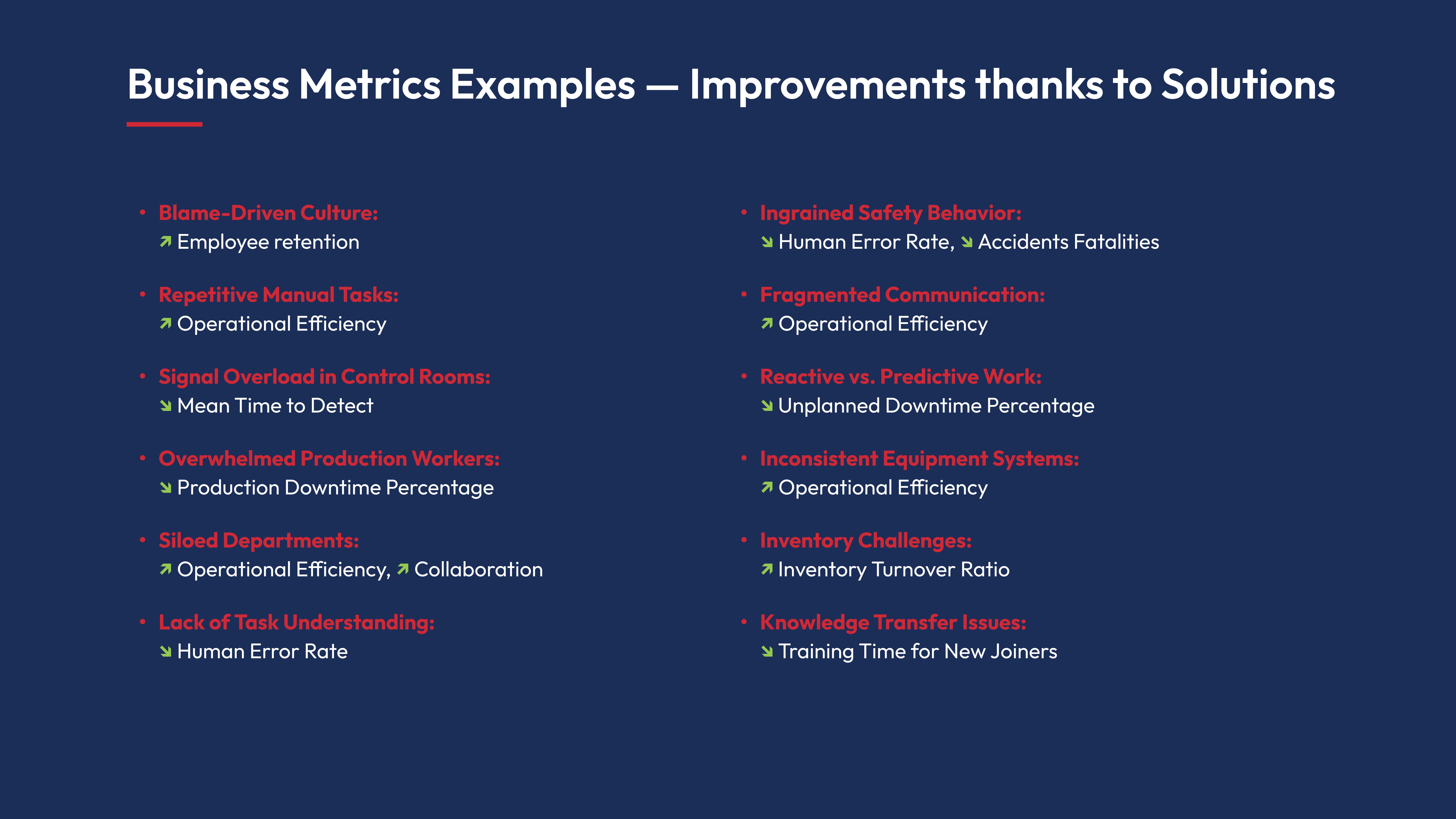
The research connected observed human problems with measurable business indicators. Blame-driven culture relates to employee retention. Repetitive manual tasks affect operational efficiency. Signal overload in control rooms affects mean time to detect. Reactive work contributes to unplanned downtime.
Other opportunities emerged around fragmented communication, inconsistent equipment systems, inventory challenges, task understanding, knowledge transfer, safety behaviour, and the need to move from reactive response toward predictive, better-supported work.
A human-centered opportunity map for industrial transformation.
The work translated field research into business-relevant opportunity areas, showing where better UX, communication, training, automation and decision support could improve operational performance.